

TL;DR:
- Implementing wall-mounted grab bars, improved lighting, and removing floor hazards are essential for preventing falls among older adults. Regular safety reassessment, medication reviews, and cognitive safety tools further reduce the risk, promoting independence and confidence. Combining physical modifications with ongoing evaluation creates a comprehensive, living approach to elderly home safety.
An elderly safety measures list is a structured set of home modifications and behavioural strategies designed to prevent falls, reduce accidents, and protect the independence of older adults. Falls are the leading cause of both deaths and injuries among adults aged 65 and older, making prevention the single most urgent priority for any caregiver. The most impactful starting points are grab bars, motion-sensor lighting, and medication review. This guide organises those measures by urgency, so you can act on the highest risks first.
1. Install grab bars where falls are most likely
Bathrooms are the most dangerous room in any home for an older adult. Grab bars fitted beside the toilet, inside the shower, and along the bath edge give seniors a reliable anchor during the moments they are most vulnerable. The critical detail most caregivers miss is that grab bars must be mounted into wall studs, not drywall. A bar fixed only to drywall will pull free under body weight, turning a safety feature into a hazard.
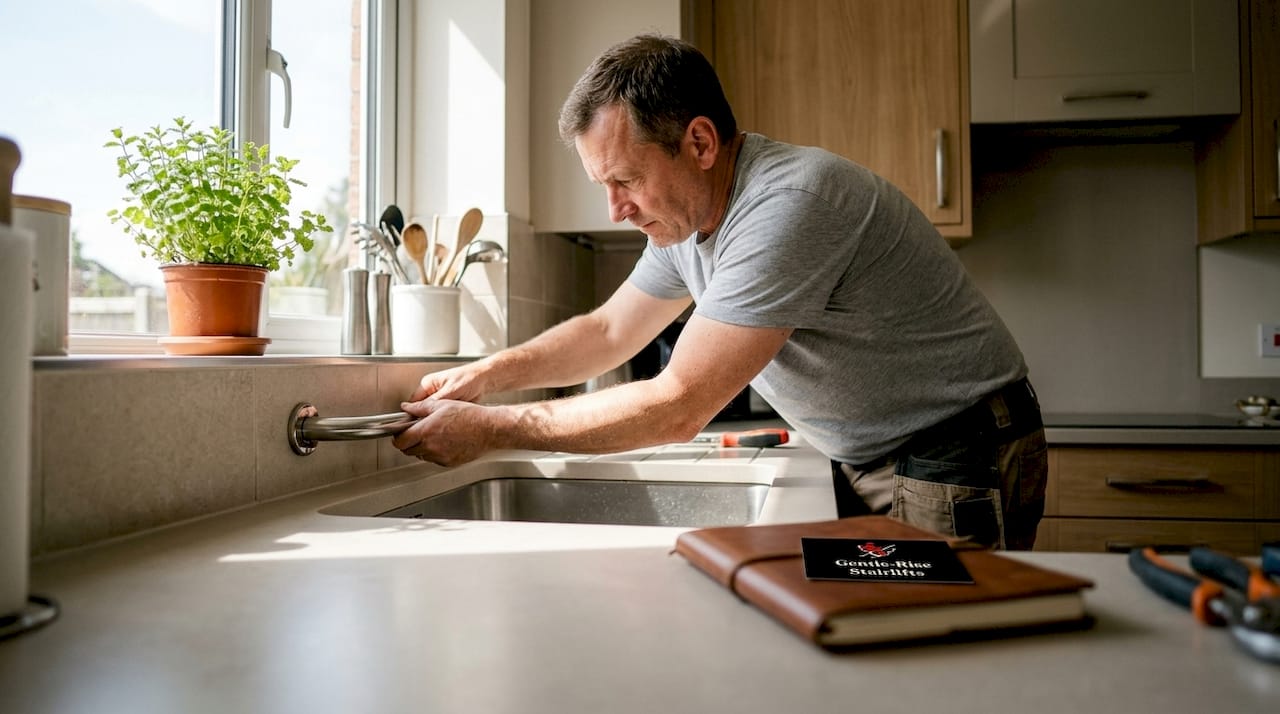
Locate studs with a stud finder before drilling. If studs are not positioned where you need the bar, use a specialist grab bar with a wall plate that distributes load across a wider surface. A qualified handyperson or occupational therapist can assess the correct height and angle for each user.
Pro Tip: Ask an occupational therapist to mark the exact positions before any drilling begins. Their recommendations are based on the individual's height, grip strength, and movement patterns, which makes a real difference to usability.
2. Improve lighting throughout the home
Poor lighting is a direct contributor to trips and missed steps, particularly on staircases and along the route from bedroom to bathroom at night. Motion-sensor lighting in hallways, on landings, and inside cupboards removes the need to fumble for a switch in the dark. Plug-in night lights are a low-cost option for bedrooms and bathrooms.
Identifying the high-traffic paths your elderly relative uses most, especially the night-time route from bed to bathroom, lets you target modifications where they will have the greatest effect. Replace dim bulbs with bright LED alternatives throughout, and check that light switches are reachable from a seated or stooped position.
3. Remove and secure trip hazards on floors
Loose rugs, trailing cables, and cluttered walkways are among the most common causes of falls in the home. Remove any rug that cannot be fully secured with non-slip backing and double-sided tape. Tuck cables behind furniture or use cable tidies fixed to skirting boards.
Keep main walkways clear of furniture that has migrated into paths over time. This includes low coffee tables, footstools, and decorative items on the floor. A single clear route through each room is safer than a room that looks tidy but requires weaving between obstacles.
4. Use non-slip surfaces on stairs and wet areas
Stairs and wet bathroom floors account for a disproportionate number of serious falls. Non-slip stair treads, fitted securely to each step, reduce the risk of a foot sliding forward on descent. In bathrooms, a non-slip mat inside the shower tray or bath and a separate mat on the floor outside provide grip at the two most critical moments: stepping in and stepping out.
Check that stair handrails run the full length of the staircase and are fixed firmly to the wall. A handrail that wobbles or ends before the bottom step offers false reassurance. For detailed guidance on making stairs safer, the stair safety tips from Gentlerise Stairlifts cover both handrail standards and non-slip surface options.
5. Prioritise modifications using a triage method
Not every modification can happen at once, and that is fine. A triage approach categorises improvements into three groups: Do Now, Do Soon, and Done. "Do Now" covers anything that presents an immediate fall risk, such as a loose handrail or a missing bath mat. "Do Soon" covers improvements that reduce risk over time, such as better lighting or furniture rearrangement. "Done" tracks completed changes so nothing is revisited unnecessarily.
This method stops caregivers from feeling overwhelmed and keeps attention on the modifications with the highest urgency. A home mobility survey can help you build this list with professional input, particularly if the home has multiple floors or complex layout challenges.
6. Manage cognitive safety and kitchen risks
Cognitive decline introduces a category of risk that physical modifications alone cannot address. Automatic stove shut-off devices and burner locks prevent kitchen fires caused by a hob left unattended. These devices are widely available and can be fitted without professional installation in most cases.
Beyond the kitchen, consider the following measures for homes where cognitive impairment is a factor:
- Fit cabinet locks on cupboards containing cleaning products, sharp tools, or medications
- Install door alarms that alert caregivers when an exterior door is opened unexpectedly
- Use GPS trackers for seniors who are prone to wandering, particularly those with dementia
- Label rooms and key items clearly to reduce confusion and frustration
Technology and locking devices significantly reduce accidental injuries linked to forgetfulness or confusion, making them a practical complement to physical home modifications.
Pro Tip: Introduce cognitive safety devices gradually and involve the senior in the process where possible. Framing changes as practical upgrades rather than restrictions helps maintain dignity and reduces resistance.
7. Review medications to reduce dizziness and fall risk
Medication side effects are a frequently overlooked factor in home safety planning. Medication review with a doctor is one of the most effective steps a caregiver can take, because many common prescriptions and supplements increase dizziness, affect balance, or cause sudden drops in blood pressure when standing. This is known as orthostatic hypotension, and it is a direct fall trigger.
Raise the topic at the next GP appointment and ask specifically about deprescribing, which is the process of reducing or stopping medications that are no longer necessary or that carry disproportionate side effects. Bring a full list of all medications, including over-the-counter products and supplements. A pharmacist can also conduct a medicines use review at no cost through the NHS.
8. Support safer daily movement and physical activity
Physical activity is not just about fitness. It is a direct fall prevention strategy. Tai Chi is the most recommended exercise for balance and fall prevention among older adults, according to clinical experts at UChicago Medicine. It improves proprioception, the body's sense of its own position, which is what allows a person to recover from a stumble before it becomes a fall.
Practical steps caregivers can support include:
- Encouraging slow transitions from sitting to standing, pausing for a few seconds before walking
- Checking that walkers and canes are adjusted to the correct height for the user's arm length
- Advising proper footwear with non-slip soles and a secure fit, avoiding backless slippers
- Relocating frequently used items, such as crockery and toiletries, to heights between waist and shoulder level to avoid bending and reaching
Physical activity improves a senior's ability to recover balance after slips or stumbles, making it a complement to every environmental change you make.
9. Set up emergency preparedness and monitoring devices
A safe home also needs a rapid response plan for when accidents do occur. Medical alert systems with automatic fall detection and one-touch help calls connect seniors to emergency services within seconds, significantly improving outcomes after a fall. Devices such as those from Lifeline or Telecare Direct are widely used across the UK and can be worn as a pendant or wristband.
Beyond personal alarms, a thorough senior safety checklist for emergency preparedness should include:
- Smoke detectors and carbon monoxide sensors on every floor, tested monthly
- A fire extinguisher in the kitchen, with the senior and any regular visitors shown how to use it
- An emergency contact list printed in large text and posted visibly in the kitchen and hallway
- A door alarm or video doorbell to screen visitors and prevent distraction-based accidents
For broader home security considerations, the home security checklist from Safes and Security Direct covers property-level protections that complement personal safety devices.
10. Schedule regular reassessments as needs change
A senior safety checklist is not a one-time exercise. Mobility, cognition, and health status change over time, and the home environment needs to keep pace. A customised home assessment by a Senior Home Safety Specialist balances independence with real needs and identifies risks that family members may have stopped noticing because they see the home every day.
Schedule a formal reassessment after any significant health event, such as a hospital admission, a fall, or a new diagnosis. Between formal assessments, walk through the home every three to six months with the triage method in mind, checking for new hazards and confirming that existing modifications are still in good condition. The age-friendly home modifications guide from Gentlerise Stairlifts provides a practical framework for these ongoing reviews.
Key takeaways
The most effective elderly safety measures list combines physical home modifications, cognitive safety tools, medication review, and regular reassessment to reduce fall risk at every level.
| Point | Details |
|---|---|
| Falls are the primary risk | The CPSC confirms falls are the leading cause of death and injury in adults aged 65 and over. |
| Grab bars require stud mounting | Bars fixed only to drywall will fail under load; always mount into wall studs for reliable support. |
| Medication review prevents falls | GP-led deprescribing reduces dizziness and orthostatic hypotension, two direct fall triggers. |
| Triage keeps priorities clear | Categorise modifications as Do Now, Do Soon, and Done to act on the highest risks first. |
| Reassessment is ongoing | Review the home every three to six months and after any significant health event. |
What I have learnt from years of watching families get this wrong
Most caregivers start with the visible hazards. They buy a bath mat, tuck away a cable, and feel the job is done. I understand that instinct. It is satisfying to make a tangible change. But the modifications that prevent the most serious falls are often the ones that require a professional conversation, not a trip to a hardware shop.
The grab bar mounted into drywall because no one checked for studs. The medication causing dizziness that nobody thought to mention to the GP. The staircase used three times a day that has no plan attached to it. These are the gaps I see repeatedly, and they are the ones that lead to the falls that change everything.
What actually works is treating home safety as a living process rather than a checklist you complete once. Involve the senior in every decision. Their knowledge of how they move through the home is irreplaceable, and their cooperation makes every modification more effective. A grab bar they helped choose and understand is one they will actually use.
The hardest part for most families is accepting that safety and autonomy are not opposites. Done well, the right modifications give older adults more confidence to move freely, not less. That shift in perspective is where the real work begins.
— lee
How Gentlerise Stairlifts supports safer mobility at home
Stairs are one of the highest-risk areas in any home for an older adult, and a stairlift removes that risk entirely by replacing the physical effort of climbing with a safe, seated journey.

Gentlerise Stairlifts installs straight, curved, and reconditioned stairlift models across the UK, with prices starting at £795 and installation often completed within hours. The Protect+ maintenance programme provides ongoing safety checks and aftercare, so the lift continues to perform reliably long after installation. If you are assessing mobility needs for a loved one, a free home survey from Gentlerise Stairlifts is the clearest way to understand what solution fits your home and budget.
FAQ
What are the most important items on an elderly safety measures list?
Grab bars in bathrooms, motion-sensor lighting on staircases and hallways, and secured floor surfaces are the three highest-impact modifications. Medication review with a GP is equally critical, as prescription side effects are a leading but frequently overlooked fall trigger.
How do I prioritise home safety improvements for an elderly relative?
Use a triage method that groups changes into Do Now, Do Soon, and Done. Immediate hazards such as loose handrails or missing bath mats belong in the Do Now category and should be addressed before anything else.
Does physical activity really reduce fall risk in older adults?
Yes. Tai Chi is the most clinically recommended exercise for balance and fall prevention in older adults, according to UChicago Medicine. Regular activity improves the body's ability to recover from stumbles before they become falls.
When should I reassess home safety measures for an elderly person?
Reassess after any significant health event, including a fall, hospital admission, or new diagnosis. A routine review every three to six months is also advisable, as mobility and cognitive needs change gradually over time.
Are medical alert devices worth the cost for elderly people living alone?
Medical alert systems with automatic fall detection connect seniors to emergency services within seconds of a fall, which significantly improves outcomes. For anyone living alone, the response time advantage makes them one of the most cost-effective safety investments available.