
TL;DR:
- Accessible home solutions include features like ramps, wider doorways, and adaptive fixtures to promote safety and independence.
- Planning these modifications early, especially in high-risk areas like entrances and bathrooms, improves safety and preserves home aesthetics.
Accessible home solutions are modifications, features, and design principles that allow people with mobility challenges to safely and independently use their living spaces. The term covers everything from ramp gradients and doorway widths to stairlifts and adaptive kitchen fittings. In the industry, this field is often called universal design or barrier-free home design, and both terms sit at the heart of defining accessible home solutions. Approximately 26% of Americans live with a disability, and the picture across the UK is similarly significant. Whether you are a homeowner planning ahead or a renter managing a mobility challenge right now, understanding what accessible design actually means is the first step towards a safer, more independent home.
What are the essential features that define accessible homes?
Accessible home design is built on a set of measurable, functional standards. These standards draw heavily from ADA guidelines, which were written for public buildings but now inform private home adaptations across the UK and beyond. The goal is always the same: remove the physical barriers that turn ordinary rooms into obstacles.
Entrances and doorways
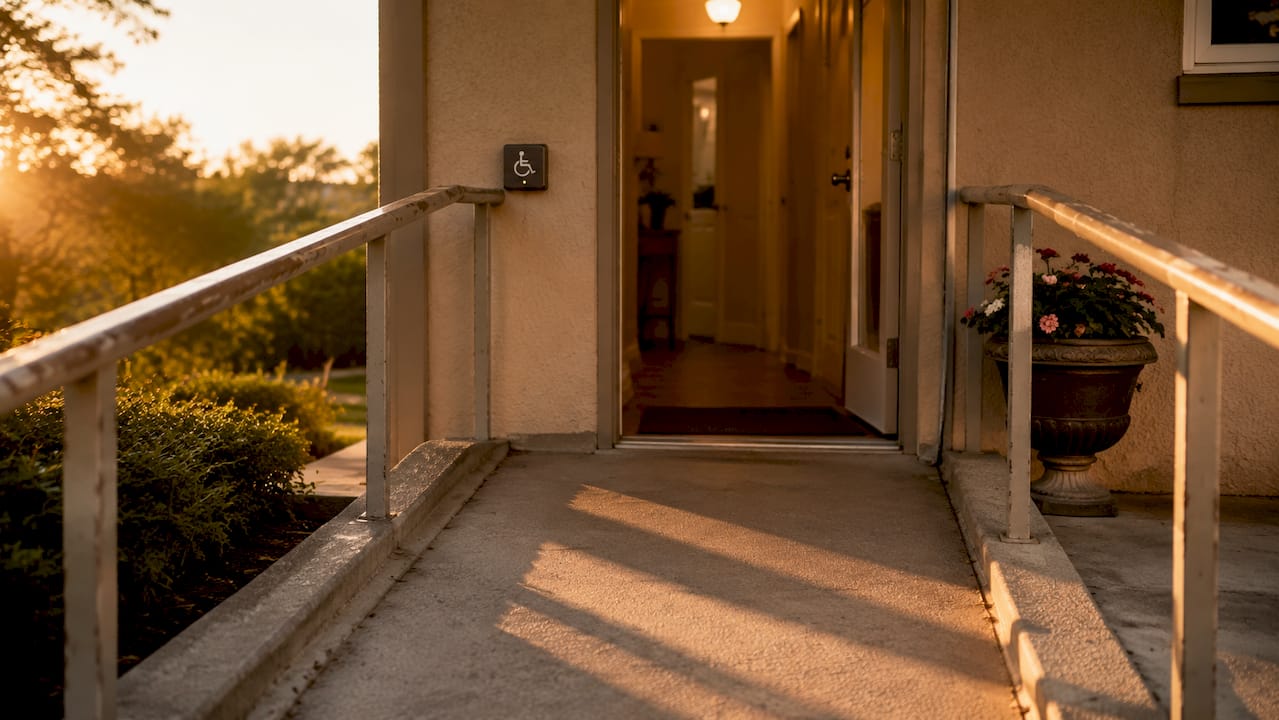
The entrance is the most critical point in any accessibility plan. A 36-inch clear doorway opening is the preferred standard, exceeding the basic 32-inch minimum to accommodate mobility aids and the user's hand clearance on the frame. Zero-step entrances, where the threshold sits flush with the exterior path, remove the most common trip hazard in the home. Where a step is unavoidable, a 1:12 slope ratio ramp is the accepted standard. That means one inch of rise for every twelve inches of run, producing a gentle gradient that most wheelchair users can manage independently. A guide to choosing mobility ramps covers materials and construction in detail if you are planning this modification.
Interior navigation and turning space
Inside the home, the key measurement is the turning circle. Wheelchair users require a minimum 60-inch diameter clear turning circle in primary rooms for a full 360-degree rotation. That is roughly 1,524 mm, and it affects furniture layout, hallway widths, and the size of wet rooms. Many older UK properties fall short of this in bathrooms and kitchens, which is why these two rooms consistently top the list for priority modifications.
Bathrooms, kitchens, and adaptive hardware
Roll-in showers with no lip, grab bars positioned at transfer height, and non-slip flooring are the three non-negotiable bathroom features. In the kitchen, adjustable countertops around 30 inches with recessed plumbing beneath allow wheelchair users to work at the surface without their knees hitting the cabinet frame. Lever door handles replace round knobs throughout, as they require no grip strength. Smart lighting with motion sensors and large-format switches reduce the need for fine motor control at every entry point.
Pro Tip: Fit lever handles and motion-sensor lighting first. Both are low-cost, high-impact changes that improve daily life immediately and require no structural work.
Universal design vs specialised adaptations: which approach suits you?
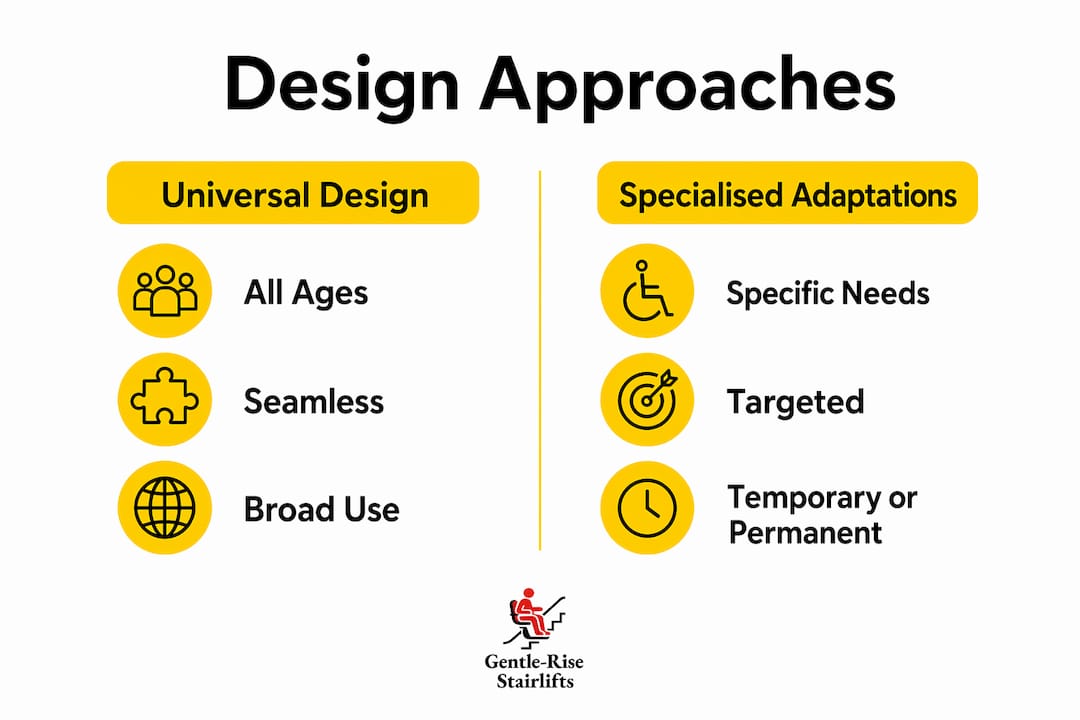
These two approaches to accessible living solutions are not opposites. They sit on a spectrum, and most homes benefit from both.
| Feature | Universal design | Specialised adaptations |
|---|---|---|
| Target user | All ages and abilities | Specific disability or condition |
| Aesthetics | Blends with standard décor | May appear clinical if poorly chosen |
| Cost | Higher upfront, lower retrofit cost | Variable, often lower initial outlay |
| Resale value | Preserves or improves value | Neutral to positive if well integrated |
| Flexibility | Scales as needs change | May need replacing as condition changes |
Universal design integrates accessibility for all ages without making the home feel adapted. A wider doorway looks like a design choice, not a concession. A walk-in shower suits everyone from a toddler to a wheelchair user. The principle is that good design serves the widest possible range of people without stigma or visible compromise.
Specialised adaptations, by contrast, address a particular condition directly. A stairlift, a ceiling track hoist, or a height-adjustable bath are purpose-built for specific needs. They are often faster and cheaper to install than a full universal design retrofit, and they solve an immediate problem precisely. The limitation is that they can look clinical if the product range is narrow, and they may need replacing as a person's condition changes.
The most practical approach for most homeowners is to start with universal design principles in high-traffic areas and add specialised adaptations where a specific need demands it. Planning accessible features from the start preserves resale value and avoids the higher cost of retrofitting structural changes later.
Pro Tip: When renovating a bathroom, specify a level-access shower tray even if you do not currently need one. The cost difference at build stage is minimal. The retrofit cost later is substantial.
What practical steps should you take to plan accessible modifications?
A room-by-room audit is the most reliable starting point. Walk through the home with a notepad and assess each space against the core standards: door widths, floor surfaces, lighting levels, and the presence of steps or lips.
-
Start with entrances and bathrooms. Prioritising entrances and bathrooms addresses the highest safety and independence risks first. Falls at the threshold and in the bathroom account for a disproportionate share of home injuries among older adults and people with mobility challenges.
-
Separate quick wins from structural work. Lever handles, grab bars, non-slip mats, and improved lighting can be installed in a weekend. Widening doorways, installing a stairlift, or fitting a roll-in shower require planning permission checks, contractor quotes, and in some cases landlord consent.
-
Set a phased budget. Accessible home modifications range from a few pounds for a rubber threshold ramp to several thousand for a stairlift or wet room conversion. Prioritise by risk and frequency of use, not by cost alone. A room-by-room guide to inclusive upgrades can help you sequence modifications sensibly.
-
Check your tenure. Renters in England have rights under the Equality Act 2010 to request reasonable adjustments from landlords. Landlords cannot unreasonably refuse adaptations for disabled tenants, though they may require the tenant to restore the property on leaving.
-
Choose qualified professionals. For structural work, use contractors with experience in accessible home design. For stairlifts, choose a provider who conducts a free home survey, offers a range of models including reconditioned options, and provides an aftercare plan.
Pro Tip: Ask any contractor for references from previous accessibility projects specifically. General building experience does not automatically translate to knowledge of turning circles, grab bar load ratings, or stairlift rail geometry.
Do accessible homes have to look clinical or institutional?
The short answer is no. The longer answer is that poorly chosen adaptations can look clinical, but well-specified ones do not. Modern accessible home design uses architectural-style grab bars and slip-resistant flooring that matches standard home décor. The difference between a grab bar that looks like a hospital fitting and one that looks like a towel rail is largely a matter of finish and specification.
Several features that support accessibility are also considered desirable by the general market:
- Walk-in showers with level access are a mainstream bathroom trend, not an accessibility marker.
- Lever door handles are standard in most new-build properties across the UK.
- Wide hallways and open-plan layouts are sought after for their sense of space, not just their navigability.
- Good ambient lighting with layered sources improves comfort for everyone, not only those with visual impairments.
Colour contrast is one area where accessibility and aesthetics genuinely require thought. A contrasting colour between the floor and the wall, or between a step edge and the tread, significantly reduces fall risk for people with low vision. The contrast does not need to be stark. A warm timber floor against a pale wall achieves the necessary differentiation while looking entirely intentional.
The strongest argument for planning accessibility early in a renovation is that the design can absorb the requirements without compromise. A bathroom designed from scratch around a 1,500 mm turning circle looks spacious. The same bathroom retrofitted to accommodate a wheelchair looks squeezed. Accessible design integrated during the design phase maintains both functionality and the overall feel of the home.
Key takeaways
Accessible home solutions work best when they are planned early, prioritised by risk, and chosen for both function and appearance.
| Point | Details |
|---|---|
| Start with high-risk areas | Entrances and bathrooms carry the greatest fall risk and should be modified first. |
| Use measurable standards | A 36-inch doorway, 1:12 ramp slope, and 60-inch turning circle are the core benchmarks. |
| Plan before you build | Integrating accessibility at design stage costs less and looks better than retrofitting later. |
| Combine both approaches | Universal design principles and specialised adaptations work best together, not in isolation. |
| Style is not a trade-off | Architectural grab bars, level-access showers, and lever handles suit any home aesthetic. |
What I have learned from watching homeowners get this wrong
The most common mistake I see is treating accessibility as a single project rather than a process. A homeowner installs a grab bar in the bathroom, ticks the box, and considers the job done. Six months later they are struggling on the stairs, the kitchen worktop is the wrong height, and the front door still has a 75 mm step. Accessibility is not one modification. It is a layered set of decisions that compound over time.
The second mistake is ignoring interior navigation. Entrances and bathrooms get the attention because they are the obvious pinch points. But the hallway that is 800 mm wide, the bedroom door that opens inward and blocks the turning space, the living room furniture arranged for aesthetics rather than circulation: these are the daily frustrations that erode independence quietly. An age-friendly home modifications guide addresses exactly these overlooked spaces.
My honest view is that the framing matters enormously. Homeowners who approach accessibility as a lifestyle upgrade make better decisions than those who approach it as a medical necessity. The former group asks "how do I make this home work better for everyone?" The latter group asks "what is the minimum I need to do?" The first question produces homes that are genuinely pleasant to live in. The second produces homes that feel like compromises. Accessibility done well is simply good design.
— lee
How Gentlerise Stairlifts supports your accessibility plans
For homes with more than one floor, the staircase is often the single biggest barrier to independent living. Gentlerise Stairlifts installs straight, curved, and reconditioned stairlift models across the UK, with prices starting at £795 and installation often completed within hours of the survey.
Whether you need a permanent solution or a short-term rental while recovering from surgery, Gentlerise Stairlifts offers flexible options backed by the Protect+ aftercare programme. A free home survey takes the guesswork out of specification. Visit Gentlerise Stairlifts to book yours, or review stairlift costs in the UK to plan your budget before the appointment.
FAQ
What is the minimum doorway width for wheelchair access?
A 36-inch clear opening is the preferred standard for wheelchair access in private homes, exceeding the basic 32-inch ADA minimum to allow for hand clearance and mobility aid width.
Can renters make accessibility modifications to their home?
Renters in England can request reasonable adjustments under the Equality Act 2010. Landlords cannot unreasonably refuse adaptations for disabled tenants, though restoration conditions may apply.
What rooms should I prioritise for accessibility modifications?
Entrances and bathrooms carry the highest risk and should be addressed first, as they account for the greatest proportion of falls and independence limitations in the home.
Does accessible design reduce a home's resale value?
Well-integrated accessible features preserve or improve resale value. Planning accessibility during the design phase produces results that read as quality design rather than medical adaptation, which appeals to a broad buyer market.
What is the difference between universal design and specialised adaptations?
Universal design creates homes that work for all ages and abilities without visible compromise. Specialised adaptations, such as stairlifts or ceiling hoists, address a specific condition directly and are often faster to install as an immediate solution.