
TL;DR:
- Cost-effective mobility solutions include reconditioned and rental stairlifts, along with grants and community transport options. Proper assessment and funding applications, especially the Disabled Facilities Grant, can significantly reduce costs and improve independence. Choosing the right solution depends on individual needs, staircase layout, and considering ongoing maintenance expenses.
Cost-effective mobility solutions are defined as aids and adaptations that restore safe, independent movement at home without placing unnecessary financial strain on the user or their family. For anyone managing reduced mobility, whether through age, surgery recovery, or a long-term condition, the right equipment can mean the difference between staying at home confidently and facing far costlier care alternatives. This guide covers the full picture: from stairlifts and ramps to funding through the Disabled Facilities Grant, rental arrangements, and affordable transportation options beyond your front door. Gentlerise Stairlifts has helped hundreds of UK households find solutions that work within their budget, and the principles here apply whether you are buying, renting, or exploring grants.
What types of affordable mobility aids are available for home use?
Straight stairlifts and curved stairlifts represent the most common home adaptation, but they differ sharply in cost. Straight stairlifts cost between £2,000 and £5,000 installed, while curved models can reach £7,000 to £15,000 due to custom-fabricated rails. That gap alone makes staircase configuration one of the most important factors in any budget plan. If your staircase is straight, you have the widest range of affordable options available to you.
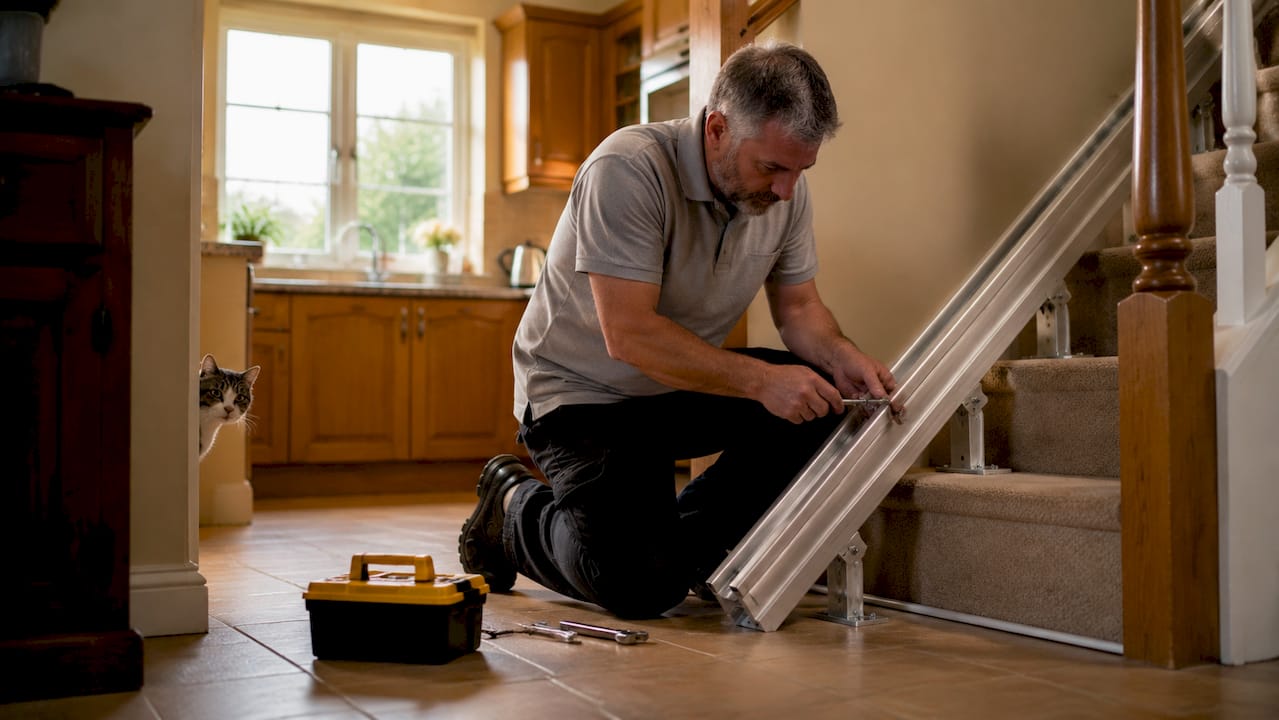
Beyond stairlifts, several other aids serve different mobility needs at lower price points. Power wheelchairs and mobility scooters address general in-home and outdoor movement. Threshold ramps and portable modular ramps cost a few hundred pounds and remove trip hazards at doorways. Vertical platform lifts suit users who cannot transfer to a seated stairlift but face a shorter vertical rise, such as a raised entrance or a split-level floor.
Reconditioned stairlifts can save 30 to 50 per cent off new prices and typically cost between £1,000 and £3,000 installed, though they are generally only available for straight staircases. Reputable suppliers refurbish these units to a safe working standard and include a warranty, making them a genuinely reliable budget option rather than a compromise. Gentlerise Stairlifts offers reconditioned models alongside new straight and curved lifts, so you can compare both at the same point of contact.
Rental is worth considering when the need is short-term. Rental stairlifts cost between £150 and £250 per month, and the arrangement makes financial sense for periods under six to twelve months. Beyond that window, the cumulative monthly payments typically exceed the purchase price of a reconditioned unit.
| Option | Approximate cost | Best suited for |
|---|---|---|
| New straight stairlift | £2,000 to £5,000 | Permanent use on a straight staircase |
| New curved stairlift | £7,000 to £15,000 | Permanent use on a curved or L-shaped staircase |
| Reconditioned stairlift | £1,000 to £3,000 | Budget buyers with a straight staircase |
| Rental stairlift | £150 to £250 per month | Short-term recovery or trial periods |
| Threshold ramp | £100 to £500 | Doorway access and minor level changes |
Pro Tip: Before committing to any purchase, read through the types of stairlifts guide to confirm which model suits your staircase layout. Buying the wrong type is the most common and most expensive mistake.
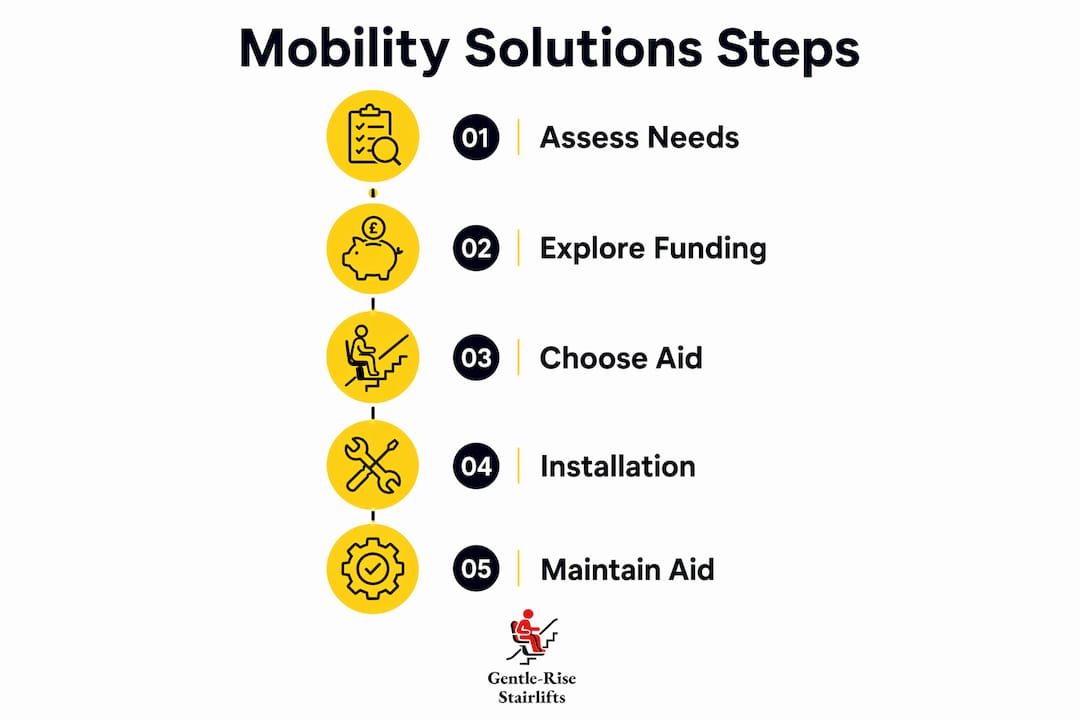
How can you finance and fund affordable mobility solutions?
Funding is available from multiple sources in the UK, and most people do not explore all of them before spending their own money. Starting with grants before considering loans or savings is always the right sequence.
-
Disabled Facilities Grant (DFG). The DFG provides up to £30,000 in England for home adaptations, including stairlifts, ramps, and bathroom modifications. It is means-tested, so your contribution depends on household income and savings. Applications go through your local council, and a referral from an occupational therapist strengthens the case considerably.
-
Veterans Affairs grants. In the United States, VA grants and Medicaid HCBS waivers can fully cover stairlift costs for qualifying veterans and income-eligible seniors. Coverage limits vary by state and programme, but these routes are worth pursuing before any out-of-pocket spend.
-
Manufacturer and dealer financing. Many stairlift suppliers, including Gentlerise Stairlifts, offer interest-free or low-interest payment plans that spread the cost over twelve to thirty-six months. This converts a large upfront payment into a manageable monthly figure without requiring a credit application from a bank.
-
Home equity loans. If you own your property, a home equity loan or a remortgage can release funds at a lower interest rate than a personal loan. The adaptation also tends to add value to the property, which partially offsets the borrowing cost.
-
Charitable and nonprofit assistance. Organisations such as Turn2us, the Family Fund, and local Age UK branches administer grants for older and disabled people. These are not widely advertised, but a single phone call to your local Citizens Advice office can identify which schemes you are eligible for.
| Funding source | Maximum available | Means-tested? |
|---|---|---|
| Disabled Facilities Grant (England) | £30,000 | Yes |
| VA Specially Adapted Housing grant (US) | Varies by programme | Yes |
| Manufacturer payment plan | Full purchase price | No |
| Charitable grants (e.g. Turn2us) | Varies | Yes |
Pro Tip: Apply for the Disabled Facilities Grant before you purchase anything. Buying first and applying later disqualifies you in most councils. The process takes time, so start the application as early as possible.
How to choose the most cost-effective mobility solution for your home needs
The right choice depends on matching the solution to the actual mobility challenge, not simply buying the most popular product. Affordability assessments should treat stair access separately from general in-home mobility. If stairs are not the primary constraint, a power wheelchair or scooter may deliver more daily benefit than a stairlift.
Work through these questions before making any decision:
- What is the primary barrier? Stair access, doorway width, bathroom access, and outdoor mobility each call for different solutions. Identifying the single biggest constraint first prevents overspending on secondary problems.
- How often will the equipment be used? Choosing between a capital purchase and a recurring service is critical to maintaining affordability. High daily use justifies ownership; occasional use may favour rental or a shared community transport service.
- Is the need permanent or temporary? Post-surgery recovery typically lasts weeks to months. Renting a stairlift for that period costs far less than buying one, and Gentlerise Stairlifts offers short-term rental arrangements specifically for this scenario.
- What is the staircase configuration? A curved or spiral staircase immediately rules out reconditioned models and pushes costs higher. Knowing this early prevents wasted survey visits and quotation time.
- What is the total budget including ongoing costs? Purchase price is only part of the calculation. Factor in annual servicing, battery replacement, and any extended warranty before comparing quotes.
For outside mobility, consider whether a stair lift alternative such as a mobility scooter or powered wheelchair serves your needs for trips to appointments, shops, or social activities. These often qualify for VAT relief, reducing the cost by 20 per cent for eligible users.
What are the ongoing costs and maintenance considerations for budget mobility aids?
Purchase price is a one-off figure. Running costs accumulate over years, and ignoring them leads to budget surprises that undermine the original saving.
-
Annual servicing. Stairlift servicing costs approximately £100 to £300 per year. A service contract from your installer is usually the most cost-effective route, as call-out charges for unplanned repairs are considerably higher. Gentlerise Stairlifts offers the Protect+ maintenance programme, which covers annual servicing and priority call-outs under a fixed annual fee.
-
Battery replacement. Most stairlifts run on rechargeable batteries that need replacing every two to three years at a cost of £100 to £200. This is a predictable expense, so building it into your annual budget from the outset avoids any surprise.
-
Ownership versus rental over time. A reconditioned stairlift at £2,000 installed, serviced annually at £150, and with one battery replacement over five years costs roughly £3,050 across that period. Renting at £200 per month over the same five years costs £12,000. The ownership advantage is clear for any need lasting beyond twelve months.
-
Prolonging equipment lifespan. Keep the rail clean and free of debris, avoid overloading the weight limit, and report any unusual sounds or hesitation immediately. Small faults caught early cost far less than a full motor or rail replacement.
-
Warranty and local support. A warranty of at least twelve months on parts and labour is the minimum to accept. Local technical support matters as much as the warranty itself. A supplier based in your region can respond within hours rather than days, which is critical when the stairlift is the only safe route between floors.
Pro Tip: Ask your installer whether the service contract is transferable if you sell the property. A transferable contract adds value to the home and can be a selling point for future buyers.
What affordable transportation options exist beyond the home?
Home adaptations address access within four walls, but independent living also depends on getting to medical appointments, shops, and social activities without relying on family members or expensive private hire.
Microtransit services offer a practical and low-cost alternative to taxis and private cars. Birmingham On-Demand charges £1.50 per shared ride, while GoDurham Connect provides same-day, door-to-door rides at no cost in certain zones. These services are designed for accessibility and typically accommodate wheelchairs and mobility scooters. They represent a genuinely cheap mobility strategy for regular local travel.
Community transport schemes in the UK operate through local councils and voluntary organisations. Dial-a-Ride services, for example, provide pre-booked, door-to-door transport for people who cannot use standard public transport. Membership fees are low, and individual journey costs are subsidised. Ring-and-ride schemes operate on similar principles across most English counties.
Subsidised shuttle and microtransit services provide immediate access while home modifications are being arranged, which is particularly valuable when a DFG application is in progress and the adaptation has not yet been installed.
On-demand ride-sharing apps such as Uber and Bolt offer accessible vehicle options in most UK cities, though costs are higher than community transport. They work best as a supplement for journeys that fall outside community transport operating hours rather than as a primary solution. Planning for ongoing transport costs alongside equipment maintenance gives you a realistic monthly mobility budget rather than a series of unexpected bills.
For anyone in the middle of a home adaptation, community transport is not a stopgap. It is a structured part of a budget mobility plan that keeps you moving safely while the longer-term solution is put in place.
Key takeaways
The most cost-effective approach to home mobility combines a grant-funded or reconditioned stairlift with a service contract, supplemented by community transport for outside journeys.
| Point | Details |
|---|---|
| Start with grants | Apply for the Disabled Facilities Grant before purchasing any equipment to avoid disqualification. |
| Reconditioned saves most | Reconditioned straight stairlifts cost 30 to 50 per cent less than new and include warranties. |
| Rental suits short-term needs | Monthly rental makes financial sense only for periods under six to twelve months. |
| Budget for running costs | Annual servicing and battery replacement add £150 to £300 per year to the total cost of ownership. |
| Community transport fills gaps | Dial-a-Ride and microtransit services provide low-cost outside mobility while home adaptations are arranged. |
Why affordability and functionality are not opposites
People often treat price and quality as a trade-off in mobility aids, and that framing leads to poor decisions in both directions. I have seen households spend £12,000 on a new curved stairlift when a £2,500 reconditioned straight model would have served the same staircase perfectly well. I have also seen people buy the cheapest possible unit from an unverified online seller, only to face repair bills that exceeded the original saving within eighteen months.
The mistake in both cases is the same: focusing on the product rather than the need. A thorough assessment of the actual mobility challenge, the staircase layout, the frequency of use, and the available funding sources takes less than an hour with a qualified surveyor. That hour routinely saves thousands of pounds and prevents the frustration of owning equipment that does not fit the home or the person using it.
Funding is the area where most people leave money on the table. The Disabled Facilities Grant exists precisely to cover situations like these, yet many applicants do not pursue it because the process feels complicated. It is not. A single call to your local council's housing adaptation team, backed by a letter from your GP or occupational therapist, starts the process. The grant does not require repayment in most cases, which makes it the most powerful budget-friendly mobility tool available to UK residents.
My consistent advice is this: get the survey first, explore every grant before spending your own money, and choose a supplier with local aftercare rather than the lowest headline price. The total cost of ownership over five years is the only number that matters.
— lee
Find the right stairlift at the right price with Gentlerise Stairlifts
Gentlerise Stairlifts offers straight, curved, and reconditioned stairlift models with prices starting at £795, alongside short-term rental options for temporary needs. Every installation includes a free home survey, professional fitting often completed within hours, and access to the Protect+ aftercare programme for ongoing peace of mind.
Whether you are buying outright, exploring rental, or waiting on a Disabled Facilities Grant application, the team at Gentlerise Stairlifts can advise on the most practical route for your budget and your home. For detailed stairlift costs in the UK or to book your free survey, visit the website or call the team directly. Local installation, transparent pricing, and genuine aftercare support are what set a reliable supplier apart.
FAQ
What is the cheapest type of stairlift available in the UK?
Reconditioned straight stairlifts are the most affordable option, typically costing between £1,000 and £3,000 installed. They are only suitable for straight staircases but include warranties and meet the same safety standards as new models.
Does the Disabled Facilities Grant cover stairlifts?
Yes. The Disabled Facilities Grant in England provides up to £30,000 for home adaptations including stairlifts, and eligibility is determined by a means test based on household income and savings. Applications are made through your local council.
Is it cheaper to rent or buy a stairlift?
Buying is cheaper for any need lasting longer than six to twelve months. Rental costs £150 to £250 per month, which exceeds the price of a reconditioned unit within a year. Rental suits post-surgery recovery or trial periods only.
What ongoing costs should I budget for with a stairlift?
Annual servicing costs between £100 and £300, and battery replacement every two to three years adds a further £100 to £200. A service contract from your installer is the most predictable way to manage these expenses.
Are there affordable transport options for getting out of the home?
Community Dial-a-Ride schemes and microtransit services provide subsidised, accessible door-to-door transport at low cost. These services are available across most UK areas and are particularly useful while home adaptations are being arranged.