
TL;DR:
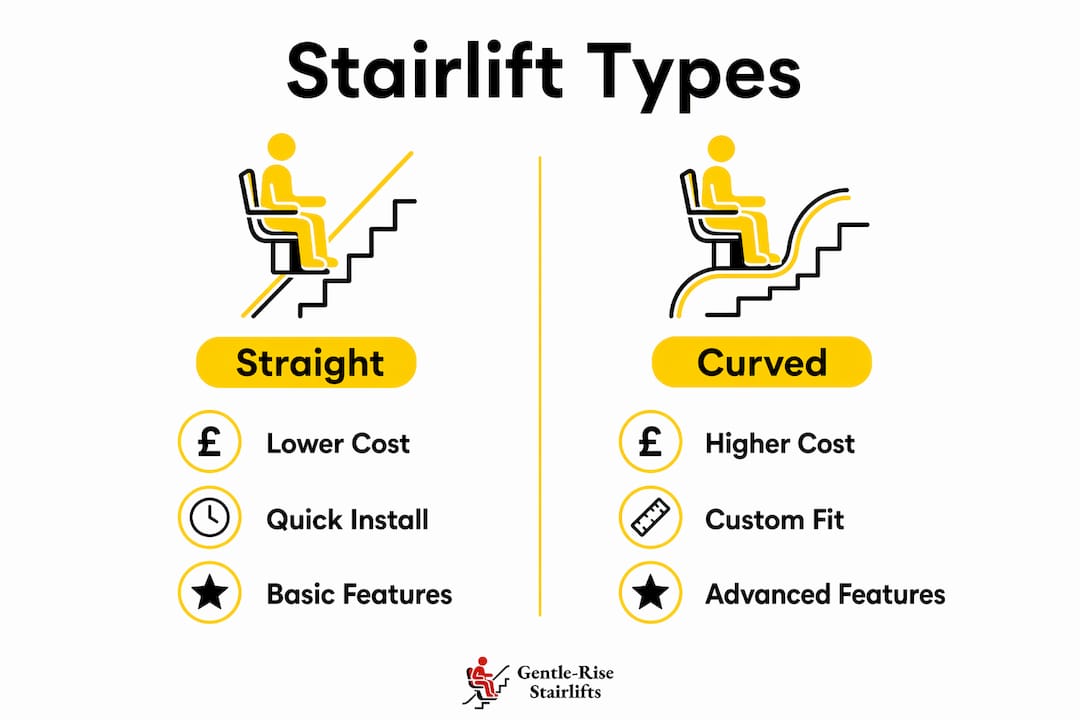
- Most UK homes in 2026 will benefit from a professionally surveyed stairlift with a Protect+ care plan for safe stair access. Straight stairlifts are less expensive and quicker to install, while curved models are higher cost and longer lead time, with reconditioned options offering budget-friendly alternatives. Proper assessment of staircase geometry and user mobility needs is essential for selecting the best device, and legal grants or VAT relief can reduce costs significantly.
For most UK homes in 2026, a professionally surveyed stairlift with a Protect+ aftercare plan from Gentlerise Stairlifts is the clearest, most cost-effective path to safe stair mobility. Straight stairlifts typically cost several thousand pounds fitted, while curved rails are usually more expensive, so knowing your staircase type early saves both time and money. If your loved one qualifies as chronically sick or disabled, the installation should be zero-rated for VAT, and a Disabled Facilities Grant from your local council may contribute further. Call Gentlerise Stairlifts today for a rough phone estimate, or arrange a free home survey to get a precise quote.
Table of Contents
- Which home mobility devices handle stairs in 2026?
- How to choose the right stairlift or mobility device for your home
- What does a stairlift cost in 2026, and how can you fund one?
- What happens during installation, and what does Protect+ cover?
- Matching safety and usability features to the user's needs
- When is a stairlift not the right answer?
- Key takeaways
- A practical note on getting this right
- How Gentlerise Stairlifts can help you take the next step
- Useful UK sources for further guidance
- FAQ
Which home mobility devices handle stairs in 2026?
The straight-versus-curved decision is the single biggest cost and lead-time fork you will face. Every other feature choice sits downstream of it.
| Device type | Best for | Installation complexity | Typical 2026 UK cost (fitted) |
|---|---|---|---|
| Straight stairlift (new) | Single straight flight; most common UK staircase | Low; usually 2–4 hours | £1,900–£3,300 |
| Curved stairlift (new) | Stairs with bends, landings or winders | High; bespoke rail, longer lead time | £3,500–£6,000+ |
| Reconditioned straight lift | Budget-conscious buyers; straight stairs only | Low | £1,000–£1,500 |
| Platform/wheelchair lift | Wheelchair users who cannot transfer to a seat | Moderate–high; structural checks needed | Varies; typically several thousand pounds |
| Through-floor (vertical) lift | No safe top/bottom landing; wheelchair users | High; floor penetration required | Typically more expensive |
| Perch/sit-stand lift | Users with limited hip or knee bend | Low–moderate | Similar to straight lift range |
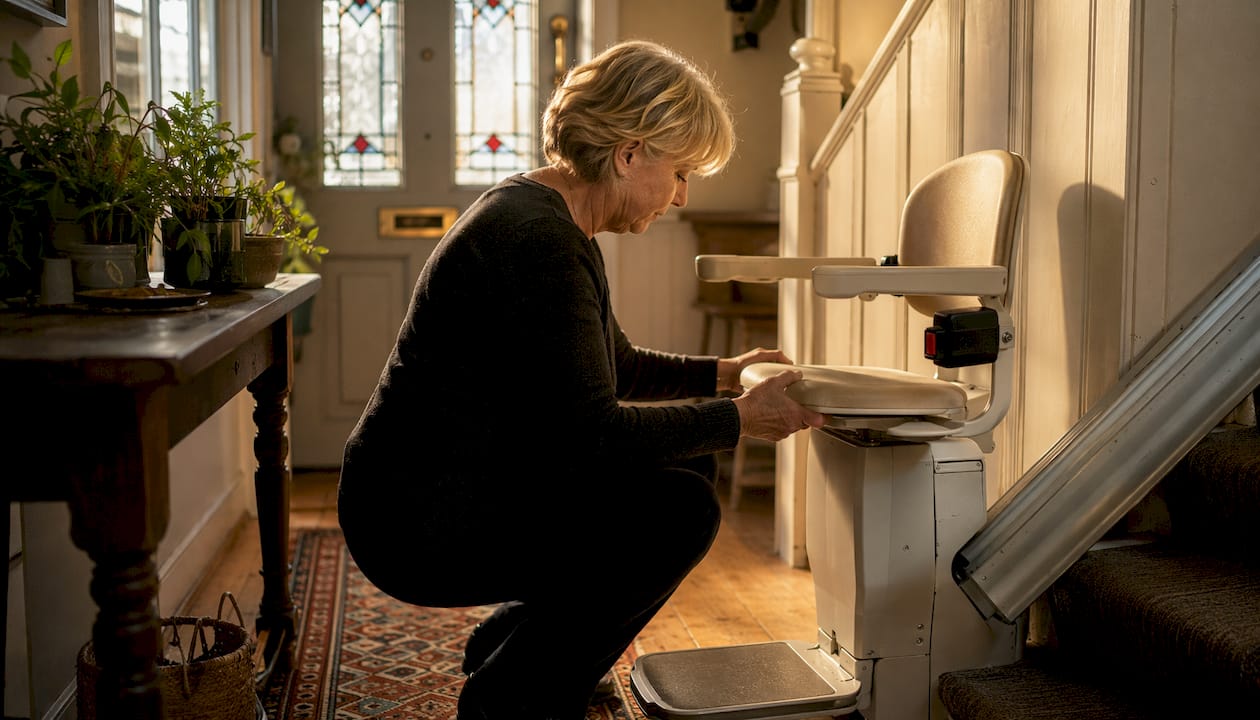
Reconditioned models suit straight stairs well and can save hundreds of pounds upfront. Rental is the sensible route for short-term recovery needs. Curved stairlifts are always made to order, so lead times are longer; if urgency matters, a straight stairlift or a reconditioned model is far quicker to arrange. For a closer look at seat types and perch options, the types of stairlifts guide covers the full range.
Pro Tip: Most straight lifts fit staircases from around 660mm wide; folding seats and footrests keep the stairs usable for other household members, so narrow-stair worries are often unnecessary.
How to choose the right stairlift or mobility device for your home
Start with the staircase geometry and a professional home survey, then match device features to the user's current and likely future mobility needs. Brand loyalty is a poor guide here; the most common buyer mistake is prioritising brand over technical feasibility.
Checklist before you agree to buy or rent
- Measure your staircase — note the width, number of steps, any bends or landings, and headroom at the top.
- Assess the user's mobility trajectory — consider balance, ability to sit and stand, use of walking aids, and how needs may change over the next few years.
- Trial key features — test the seat height, joystick or paddle control, powered swivel, and footrest fold before committing. Arthritis UK advises trialling at a Disabled Living Centre where possible.
- Check landing space — confirm there is enough room at the top and bottom for safe boarding and alighting.
- Ask about Protect+ or equivalent — request a written example of the service contract and confirm emergency call-out response times.
Supplier red flags to watch for
- Cannot give a rough phone estimate after you describe the staircase type and length.
- Pushes for a same-day decision or applies heavy discount pressure.
- Refuses to conduct an on-site measurement before issuing a final quote.
- Vague about what the maintenance contract covers after the warranty period.
For a fuller list of warning signs, the local stairlift company red flags guide is worth reading before you speak to any supplier.
What does a stairlift cost in 2026, and how can you fund one?
Straight stairlifts are significantly cheaper and quicker to fit than curved ones. The table below gives realistic fitted ranges for 2026.
| Category | Best for | Typical 2026 cost (fitted) | Typical lead time |
|---|---|---|---|
| Straight (new) | Single straight flight | £1,900–£3,300 | Days |
| Curved (new) | Bends, landings, winders | £3,500–£6,000+ | Weeks |
| Reconditioned straight | Budget; straight stairs | £1,000–£1,500 | Days |
| Rental (straight) | Short-term recovery | £350–£1,000 install + £40–£150/month | Days |
VAT zero-rating applies when the stairlift is for a chronically sick or disabled person for their own domestic use; the supplier provides a simple declaration form. The Disabled Facilities Grant (DFG), administered by local housing authorities, can contribute to adaptation costs. NHS guidance also signposts Housing Improvement Agencies (HIAs), which help with grant applications and practical delivery. Start grant conversations early; they take time to process. For a broader look at affordable adaptation options, including charity funding routes, the Gentlerise Stairlifts blog covers the detail.
Pro Tip: Renting makes genuine financial sense for post-surgery recovery of a few months. For a permanent straight staircase, a reconditioned model often beats renting on total cost within six months.
What happens during installation, and what does Protect+ cover?
A professional home survey always comes before a final quote. The surveyor checks staircase geometry, headroom, landing space, and the user's mobility needs; these factors together determine whether a straight, curved, or alternative solution is appropriate.
For a straight stairlift, on-site installation typically takes 2–4 hours. Curved rails are factory-made to the exact measurements of your staircase, so they carry a longer lead time of several weeks from survey to fitting. The typical journey runs: phone estimate, home survey, rail ordered, installation day, handover and user training.
A Protect+ style service plan covers routine servicing, priority call-out, and parts within the contract scope. Before signing, confirm the exact out-of-warranty call-out costs and emergency response times in writing. Also ask about buy-back or removal policy; if you sell the property or no longer need the lift, knowing the removal cost upfront avoids surprises later.
Straight stairlifts can typically be fitted in a single morning, making them one of the fastest home adaptations available for restoring stair access.
Matching safety and usability features to the user's needs
The right controls and seat ergonomics matter as much as the rail type for long-term independent use. A lift that is technically correct for the staircase but awkward for the user will quickly go unused.
- Joystick or paddle control — recommended for users with reduced grip strength or low dexterity; Arthritis UK specialists specifically highlight joystick options for arthritic hands.
- Powered swivel seat — reduces strain on hips and knees at the top landing; worth the extra cost for users with limited lower-limb mobility.
- Higher weight capacity — check the model's rated limit against the user's weight with a sensible margin.
- Automatic folding footrest and seat — reduces manual handling risk at top and bottom landings; remote-controlled versions add further convenience.
- Seat height adjustment — particularly useful for taller users or those with knee replacements.
At any trial or home demo, practise folding and unfolding the footplate, transferring on and off the seat, and operating the controls while seated. Never place a walking frame or stick on the lift during transit; the frame should be left at the bottom and retrieved at the top, or a second frame kept upstairs. If the user lives alone, consider whether an emergency call or monitoring option is appropriate alongside the stairlift.
Pro Tip: Ask the installer to demonstrate the 2026 stairlift safety features including obstruction sensors and seatbelt design before handover — these vary more between models than most buyers expect.
When is a stairlift not the right answer?
A stairlift suits most straight or curved domestic staircases, but there are genuine exceptions.
"It's really important that the stairlift is right for the person using it. It might be that another option, such as a vertical through-lift, would be more suitable." — Which? stairlift expert guidance
Consider an alternative when:
- The user is a full-time wheelchair user who cannot safely transfer to a seat.
- There is no safe landing space at the top or bottom of the stairs.
- The staircase is spiral or extremely narrow, ruling out standard rail fitting.
- The user's condition is likely to deteriorate to the point where a stairlift will become insufficient within a short period.
Through-floor (vertical) lifts accommodate wheelchairs and require no transfer, though they involve structural work and higher cost. Platform lifts serve similar needs in some configurations. Single-floor adaptations — moving a bedroom and bathroom to the ground floor — can be the most practical solution where stairs become permanently unmanageable; a rear extension or conversion is one route worth costing alongside lift options. For further reading on these routes, the stairlift alternatives guide covers each option in detail.
When in doubt, request an occupational therapist (OT) assessment through your GP or local authority. HIAs can also help coordinate assessments and adaptation delivery.
Key takeaways
For most UK homes, a professionally surveyed stairlift with a Protect+ service plan from Gentlerise Stairlifts remains the fastest, most cost-effective way to restore safe stair access in 2026.
| Point | Details |
|---|---|
| Straight vs curved cost gap | Straight stairlifts cost several thousand pounds fitted; curved models cost more and can be considerably pricier. |
| VAT and grant relief | Zero-rated VAT applies for chronically sick or disabled users; the Disabled Facilities Grant may also contribute. |
| Rent vs buy reconditioned | Renting suits short-term recovery; reconditioned straight lifts (£1,000–£1,500) suit permanent straight-stair needs on a budget. |
| Safety features first | Joystick controls, powered swivel seats, and automatic footrests are critical for users with limited dexterity or mobility. |
| Gentlerise Stairlifts next step | Arrange a free home survey with Gentlerise Stairlifts to confirm staircase type, Protect+ options, and a fixed quote. |
A practical note on getting this right
The gap between what buyers research online and what actually matters at the point of purchase is wider in the stairlift market than almost anywhere else in home adaptations. People often arrive at a decision under time pressure, after a fall or a hospital discharge, and that urgency is exactly when a sales-first supplier can do the most damage. The technical fit of the rail to the staircase, and the fit of the controls to the user's hands, matter far more than the brand name on the chassis.
What I consistently see overlooked is the user's future mobility trajectory. A stairlift that suits someone today may be inadequate in two years if their condition progresses. That conversation belongs in the home survey, not as an afterthought once the contract is signed. Ask the surveyor directly: "If my relative's mobility declines significantly, what are our options with this model?" A good supplier will answer that question honestly.
How Gentlerise Stairlifts can help you take the next step
Gentlerise Stairlifts sells, installs, rents, and refurbishes stairlifts across the UK, with straight stairlifts typically costing £1,900–£3,300 fitted and reconditioned straight lifts available from around £1,000–£1,500. Curved rails start around £3,500 and can exceed £6,000. Every installation begins with a free, no-obligation home survey conducted by an accredited engineer who measures the staircase, assesses the user's needs, and provides a fixed quote before any commitment is made.
The Protect+ maintenance programme covers routine servicing, priority call-out, and parts, giving you predictable ongoing costs and peace of mind long after installation. Short-term rental is available for post-surgery recovery, and reconditioned straight models offer a budget-friendly route for permanent needs. Arrange your free home survey today, or visit the Gentlerise Stairlifts homepage to view the full range of services and request a quote.
Useful UK sources for further guidance
- NHS home adaptations guidance — local assessment services, HIAs, and free equipment entitlements.
- Disabled Facilities Grant guidance for local authorities — eligibility, means-testing, and how to apply.
- Arthritis UK stairlift advice — control types, powered swivel seats, and over 40 Disabled Living Centres for impartial trials across the UK.
- Which? stairlift buying and maintenance advice — independent buyer research and maintenance cost benchmarks.
- Gentlerise Stairlifts free home survey — arrange a no-obligation survey and fixed quote.
FAQ
How much does a stairlift cost in the UK in 2026?
Straight stairlifts typically cost £1,900–£3,300 fitted; curved models start around £3,500 and can exceed £6,000. Reconditioned straight lifts are available from around £1,000–£1,500.
Can I get VAT relief on a stairlift?
Yes — if the stairlift is for a chronically sick or disabled person for their own domestic use, the supply and installation should be zero-rated for VAT; your supplier provides a declaration form to confirm eligibility.
Is the Disabled Facilities Grant available for stairlifts?
The Disabled Facilities Grant, administered by local housing authorities, can contribute to stairlift and adaptation costs; contact your local council and request an occupational therapy assessment to start the process.
When does renting a stairlift make more sense than buying?
Renting is usually the better option for short-term needs such as post-surgery recovery, with installation costs of £350–£1,000 and monthly fees of £40–£150; for a permanent straight staircase, buying or a reconditioned model is typically more cost-effective over time.
What should I check before signing a stairlift maintenance contract?
Confirm exactly what the contract covers, the emergency call-out response time, and the cost of out-of-warranty repairs; Gentlerise Stairlifts' Protect+ programme sets these terms out clearly before you commit.