
Yes, in most cases. A Protect+ maintenance programme typically pays for itself by reducing downtime, simplifying compliance and capping surprise repair bills once the manufacturer warranty ends. For anyone relying on a stairlift daily, that combination of safety and cost certainty is difficult to replicate with a pay-as-you-go arrangement.
The case rests on three things. First, safety and compliance: scheduled servicing keeps a stairlift running the way it was designed to, and it dovetails with the statutory thorough examination duties that apply to lifts used to carry people. Second, cost avoidance: Which? has found that a significant number of stairlift owners need repairs during ownership, and out-of-warranty call-outs can be expensive and slow. Third, response time: a plan with a clear service commitment gets an engineer to a broken stairlift faster than searching for an independent technician after something fails.
Protect+ tends to matter most in two situations:
- After warranty expiry. Once the manufacturer's cover runs out, you're exposed to full parts and labour costs on any fault, and repair bills on stairlifts are rarely small.
- Landlords and housing managers. If you're responsible for a stairlift in a rented or communal property, you carry duty-of-care obligations that a documented service history helps you meet.
If your stairlift is brand new and still under manufacturer warranty, a plan may be less urgent right now. Once that warranty lapses, the maths usually tips in favour of ongoing cover, which is exactly where the rest of this guide picks up.
Key Takeaways
Protect+ delivers value by combining predictable servicing costs, faster repair response and simpler compliance once a stairlift's manufacturer warranty has expired.
| Point | Details |
|---|---|
| Warranty expiry is the trigger | Plans deliver most value once free manufacturer cover ends and repair costs fall on you. |
| Servicing and inspection differ | Preventive maintenance keeps the stairlift running; a LOLER thorough examination is a separate legal requirement. |
| Exclusions hide real cost | Batteries, call-out limits and labour caps are the most common ways plans fall short of expectations. |
| Written SLAs matter most | A specific response time in writing beats a vague promise every time. |
| Gentlerise Protect+ covers the essentials | Annual servicing, priority repairs and written reports are included, with battery cover as an option. |
Table of Contents
- What does a Protect+ program actually cover?
- Does Protect+ help with LOLER inspection requirements?
- How much does a Protect+ plan usually cost?
- What exclusions and fine print should you check first?
- How do you compare different Protect+ style offers?
- What should you do if the stairlift stops working?
- What does Gentlerise's Protect+ program include?
- When is Protect+ actually worth signing up for?
- How do you book a Protect+ home survey with Gentlerise?
- Where can you read more on stairlift safety and aftercare?
- Sources
- FAQ
What does a Protect+ program actually cover?
A typical Protect+ service plan is built around four core elements: a scheduled visit, safety checks, breakdown response, and defined parts and labour terms. Knowing what sits inside each of those helps you compare offers properly rather than judging a plan on price alone.
The annual service visit is the backbone. An engineer checks the rail, carriage, seatbelt, footrest sensors and battery charge, then lubricates and adjusts moving parts to manufacturer tolerances. This is preventive work, not a formal inspection, though it often catches the small issues that would otherwise become an emergency call-out.
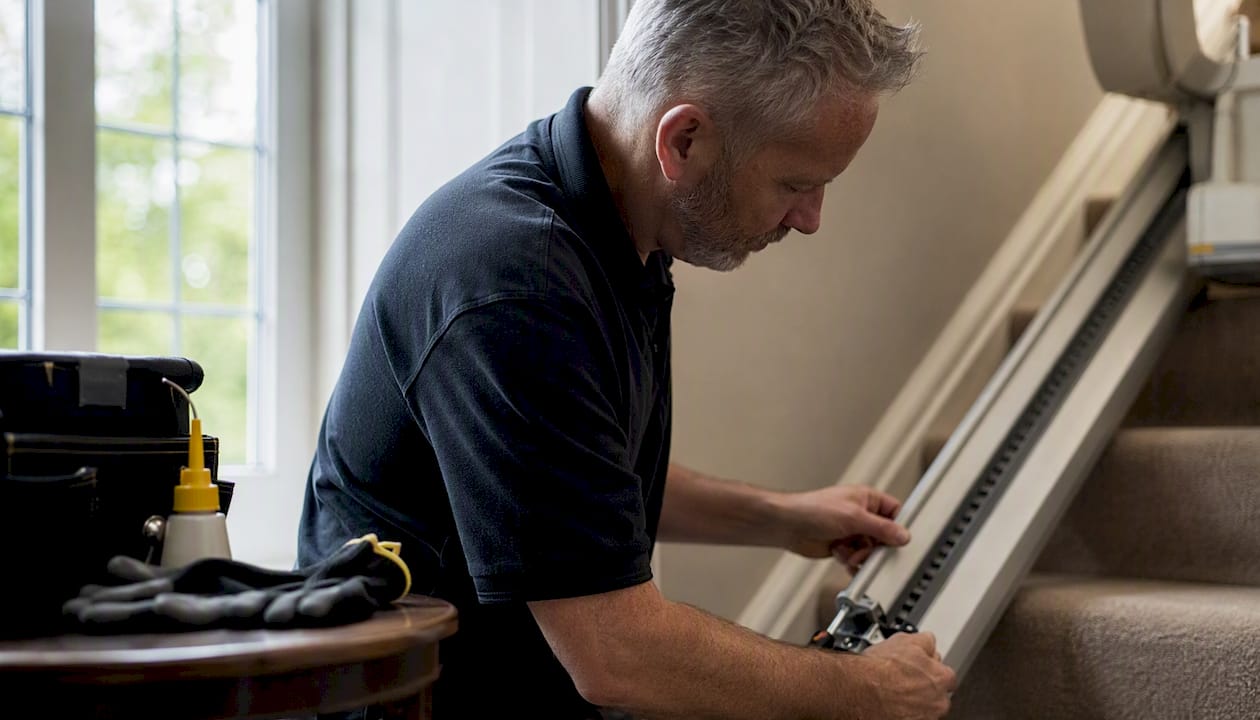
Breakdown cover is the second pillar. Most plans promise a priority response if the stairlift stops working, with faster turnaround than a customer without a contract would get. The exact response window varies by provider, so it's worth asking for the number in writing rather than accepting a vague promise of "prompt" service.
Parts and labour cover is where plans differ most. Some include labour on repairs but charge for parts; others bundle both up to a value cap. Batteries are almost always treated separately, since they're a wear item with a predictable lifespan rather than a fault.
Use this checklist against any provider's terms:
- Does the plan include one or two service visits per year?
- Is breakdown call-out included, or charged separately?
- Are parts covered, capped, or excluded entirely?
- Is battery replacement included, discounted, or full price?
- Is there a written service report after each visit?
| Coverage element | Typically included? |
|---|---|
| Annual service visit | Yes, standard on almost all plans |
| Safety checks and adjustments | Yes, part of the annual visit |
| Breakdown call-out | Yes, often with priority response |
| Parts (excluding batteries) | Varies, sometimes capped |
| Labour on repairs | Usually included |
| Battery replacement | Often an optional extra |
For a broader view of what "aftercare" should mean beyond the plan itself, this aftercare services checklist is worth reading alongside your provider's terms.
Does Protect+ help with LOLER inspection requirements?
Servicing and statutory inspection are related but not the same thing, and understanding that difference is central to why the Protect+ program matters for compliance. HSE guidance is clear that lifts used to carry people, including stairlifts in some settings, must be thoroughly examined by a competent person at set intervals, separate from routine maintenance.
A thorough examination is a formal, documented safety inspection. Preventive maintenance is the ongoing upkeep that keeps the equipment in good working order between those inspections. A Protect+ plan handles the maintenance side directly and makes the inspection side easier, because a stairlift that's been serviced regularly is far more likely to pass a competent-person check without remedial work being flagged.
SNG, which manages lifts across social housing stock, servicing lifts routinely and carrying out LOLER inspections to meet regulatory requirements. That's the model landlords and housing managers should aim to replicate at a smaller scale: consistent servicing, paired with the statutory checks the law requires.
| Preventive maintenance | Thorough examination (LOLER) |
|---|---|
| Routine lubrication and adjustment | Formal structural and safety inspection |
| Performed by service technician | Performed by a competent person |
| No legal report required | Written report is a legal requirement |
| Keeps equipment running smoothly | Confirms equipment is safe to use |
Statute callout: Under LOLER, lifting equipment used to carry people must be examined by a competent person and a written report kept on file. This applies to communal and commercial settings in particular, and landlords should treat it as a non-negotiable part of managing a stairlift, not an optional extra.
How much does a Protect+ plan usually cost?
Plan prices vary by provider and coverage level, but the pattern is consistent across the market: a standalone annual service costs less upfront than a bundled contract, while a bundled Protect+ style plan trades a higher annual fee for capped or included repair costs. Stairlift Guru notes that these two models sit at genuinely different value points depending on how much risk you want to carry yourself.
Here's a simple way to frame the decision. A single out-of-warranty repair call, covering a technician visit, diagnosis, and a faulty part such as a drive motor or control board, can run into several hundred pounds once labour and parts are combined. An annual Protect+ plan, paid once a year, spreads that risk and often includes more than one visit's worth of value if a fault does occur.
The tipping point is fairly predictable:
- Manufacturer warranty has ended. This is when you stop getting free repairs and a plan starts pulling its weight.
- The stairlift is older or heavily used. Wear-related faults become more likely, and a plan reduces the financial shock when they happen.
- You're a landlord or housing manager. Budgeting a fixed annual cost is easier than absorbing an unplanned repair bill mid-tenancy.
Which? research shows that a meaningful proportion of stairlift owners need repairs at some point, which is exactly the risk a plan is designed to absorb. Check your own warranty terms before deciding when to start a plan, since some manufacturers offer longer free cover than others.
What exclusions and fine print should you check first?
No plan covers everything, and the exclusions are usually where a "comprehensive" plan quietly stops being comprehensive. Reading the small print before you sign saves an argument later.
Common exclusions across the market include:
- Batteries, treated as a consumable wear item rather than a fault
- Deliberate or accidental damage, such as impact damage to the rail
- Home electrical faults, where the problem sits upstream of the stairlift itself
- Removal or relocation costs, if you move house or need the unit repositioned
Beyond exclusions, watch for contract traps that erode value without technically breaching the terms. A call-out limit (say, two free visits a year) can leave you paying full price for a third fault in the same period. Some plans cover parts but charge full labour rates on any claim over a certain value. Geographical response limits matter too. A national provider promising a 48-hour response may struggle to deliver that outside major towns, so it's worth asking about local technician coverage specifically.
Pro Tip: Insist on a written SLA that states the exact response window in hours or working days, not vague language like "as soon as possible." A provider confident in its service will happily put a number on paper.
Before signing anything, run the small print past this quick checklist:
- Is the response time written as a specific number, not an estimate?
- Are batteries covered, discounted, or full price?
- Is there a cap on the number of free call-outs per year?
- Does the plan cover labour on all repairs, or only some?
For a wider view of what separates a trustworthy provider from a risky one, this guide to trust signals is a useful companion read.
How do you compare different Protect+ style offers?
Before comparing any two plans, decide what actually matters to your situation: an elderly homeowner using the stairlift daily has different priorities to a housing manager overseeing several units. Age of the stairlift, how often it's used, and how quickly you'd need a repair all shape which plan features are worth paying for.
| Question to ask | Why it matters |
|---|---|
| What's the guaranteed response time? | Determines how long you'd be without a working stairlift |
| Are batteries included or extra? | A frequent hidden cost that inflates real annual spend |
| Is there a call-out limit per year? | Caps can leave later faults uncovered mid-term |
| What's the cancellation notice period? | Affects flexibility if your circumstances change |
| Is the technician local or regional? | Local coverage usually means faster real-world response |
Red flags worth a follow-up call include vague response promises, reluctance to put terms in writing, and pricing that seems unusually low compared with the rest of the market, since that's often where exclusions are hiding. If a provider won't answer these questions clearly before you sign, treat that as information in itself.
A sensible next step is requesting a written SLA and a full breakdown of inclusions before committing, then comparing that against at least one pay-as-you-go quote. That comparison alone often makes the decision obvious. For finding vetted local technicians outside a plan, this guide to reliable servicing is a useful reference point.
What should you do if the stairlift stops working?
A stairlift failure is stressful, particularly for someone who relies on it to get upstairs safely. Having a plan of action ready removes some of that panic.
- Isolate power to the unit if there's any sign of an electrical fault, such as a burning smell or sparking.
- Do not attempt to force the carriage along the rail manually if it's stuck, since this can damage the drive mechanism.
- Use the seatbelt or safety harness if you're on the stairlift when it stops, and wait for assistance rather than climbing off mid-rail.
- Contact your provider's breakdown line and quote your plan reference number if you have one.
- Ask for an estimated arrival window, not just confirmation the call has been logged.
An emergency call-out typically means the stairlift is completely unusable and the person relying on it has no safe alternative route upstairs. Under a plan with priority response, this should trigger faster turnaround than a standard service request. Real-world response times depend heavily on local technician availability and whether replacement parts need ordering, which is why response time itself is worth asking about before you ever need it.
Landlords and housing managers should build contingency planning into their process too: know in advance whether a tenant has an alternative downstairs sleeping arrangement, and keep a shortlist of backup contacts if your primary provider is ever unavailable. This mirrors good practice in other property maintenance contexts, where preventive contracts reduce the frequency of emergency call-outs across the board.
What does Gentlerise's Protect+ program include?
Gentlerise Stairlifts built Protect+ around the three pillars this guide has covered: predictable servicing, fast repair response, and written documentation you can rely on if a compliance question ever arises.
The package typically includes an annual servicing visit, priority repair response, and a written report after each visit, which doubles as useful evidence for landlords managing compliance obligations. Battery cover is offered as an optional extra rather than bundled by default, in line with how most of the market treats this consumable item.
Pricing is structured around straightforward annual terms rather than complicated tiers, and Gentlerise's main pricing information sets expectations before you commit to anything.
Getting started is simple:
- Book a free home survey. An engineer assesses your specific stairlift model and usage pattern.
- Receive a written proposal. This sets out exactly what's included, response times, and annual cost.
- Confirm contract terms. Duration and cancellation notice are agreed upfront, with no surprises buried later.
Pro Tip: Have your stairlift's model number and original purchase or installation date ready when you enquire. It speeds up the quote process considerably and helps the surveyor tailor the proposal to your exact unit.
When is Protect+ actually worth signing up for?
The strongest case for Protect+ is straightforward: once your manufacturer warranty has lapsed and the stairlift is doing daily, load-bearing work for someone with limited mobility, the cost of a plan is small next to the cost of a single failed repair leaving them stranded upstairs. That's where I'd point most homeowners and family carers first.
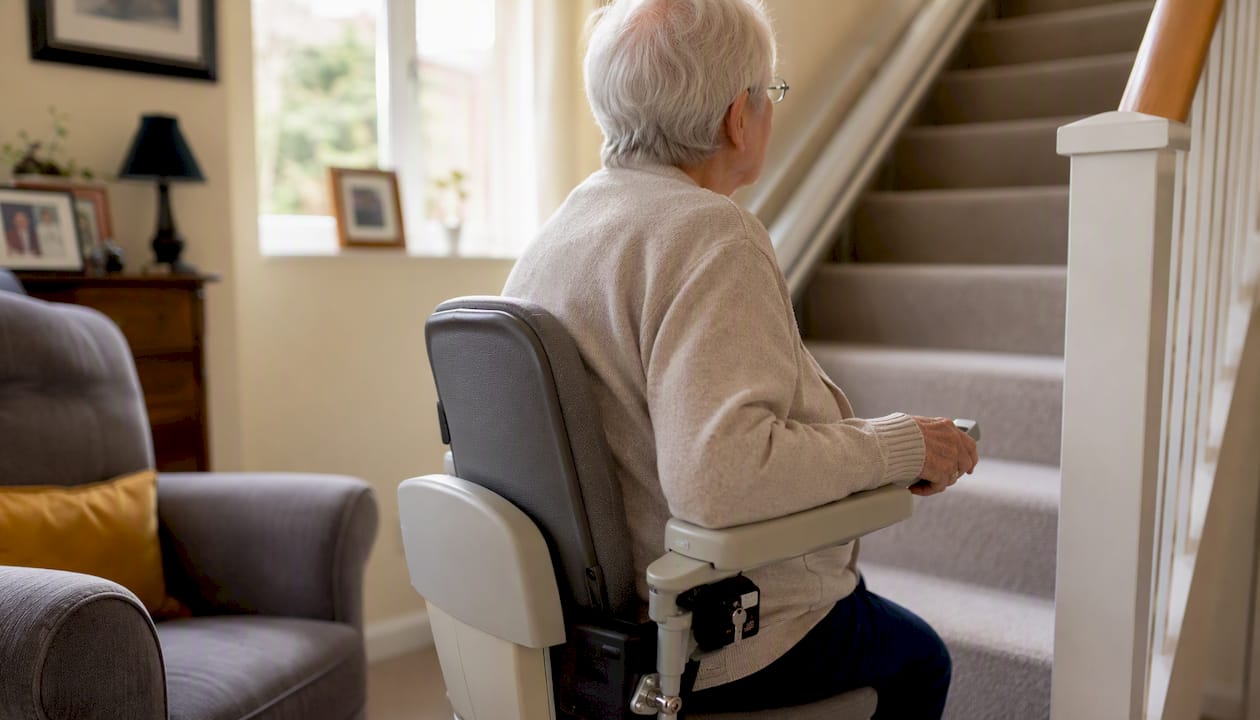
There's a caveat worth stating plainly. If your stairlift is new, still under warranty, and lightly used, a pay-as-you-go arrangement might suit you better for now, at least until that free cover runs out. Reassess the decision when the warranty clock does.
For anyone unsure which category they fall into, Gentlerise Stairlifts offers a free home survey that removes the guesswork. An engineer looks at your actual unit and usage, not a generic pricing table, and gives you a proposal based on what your situation genuinely needs.
How do you book a Protect+ home survey with Gentlerise?
Booking a free home survey is the fastest way to find out what a Protect+ plan would cost for your specific stairlift, and there's no obligation attached to the visit itself. Gentlerise Stairlifts is the same team behind installation and rental across the UK, so the engineer surveying your Protect+ needs already understands the equipment inside out.
The value proposition is straightforward: safer running, faster repairs when something goes wrong, and one predictable annual cost instead of an unknown repair bill landing at the worst possible moment. That's the trade every plan in this guide has been measured against, and it's exactly what Gentlerise Stairlifts builds Protect+ around.
Before you enquire, have three things ready: your stairlift's model or brand, the approximate purchase or installation date, and your postcode. With those details, Gentlerise Stairlifts can give you a realistic quote during the same call, and you can book a free home survey or explore Protect+ directly to see what's included before deciding.
Where can you read more on stairlift safety and aftercare?
For readers who want to verify the legal detail or explore aftercare further, these sources cover the ground this guide has drawn on:
- HSE's guidance on thorough examinations sets out the legal basis for statutory lift inspections and dutyholder responsibilities.
- SNG's lift safety page shows how a large housing provider approaches routine servicing alongside LOLER compliance.
- Which?'s stairlift buying research reflects genuine consumer experience with repair costs and waiting times.
This article is general information, not a substitute for advice from a qualified lawyer. Consult a qualified legal professional about your own circumstances before acting on anything here.
Sources
- Thorough examination and testing of lifts: Simple guidance for lift owners (INDG339)
- Things you need to know about buying a stairlift | Which? News
- Lifts and lifting equipment safety | SNG
- Stairlift warranty and aftercare | Stairlift Guru
FAQ
Is Protect+ Worth It After the Warranty Ends?
For most stairlift owners, yes. Once free manufacturer cover ends, a plan trades a fixed annual fee for protection against unpredictable repair bills, which Which? research shows a significant number of owners eventually face.
Does a Protect+ Plan Replace a LOLER Inspection?
No. Servicing keeps the stairlift maintained, but a statutory thorough examination by a competent person is a separate legal requirement for lifts used to carry people.
What's Usually Excluded From a Stairlift Service Plan?
Batteries, accidental or deliberate damage, home electrical faults, and removal costs are the most common exclusions across the market.
How Fast Should a Priority Repair Response Be?
This varies by provider, so ask for a specific number of hours or working days in writing rather than accepting a vague estimate.
Does Gentlerise's Protect+ Include Written Inspection Reports?
Yes, Gentlerise Stairlifts' Protect+ program includes a written report after each service visit, useful evidence for landlords managing compliance obligations.